



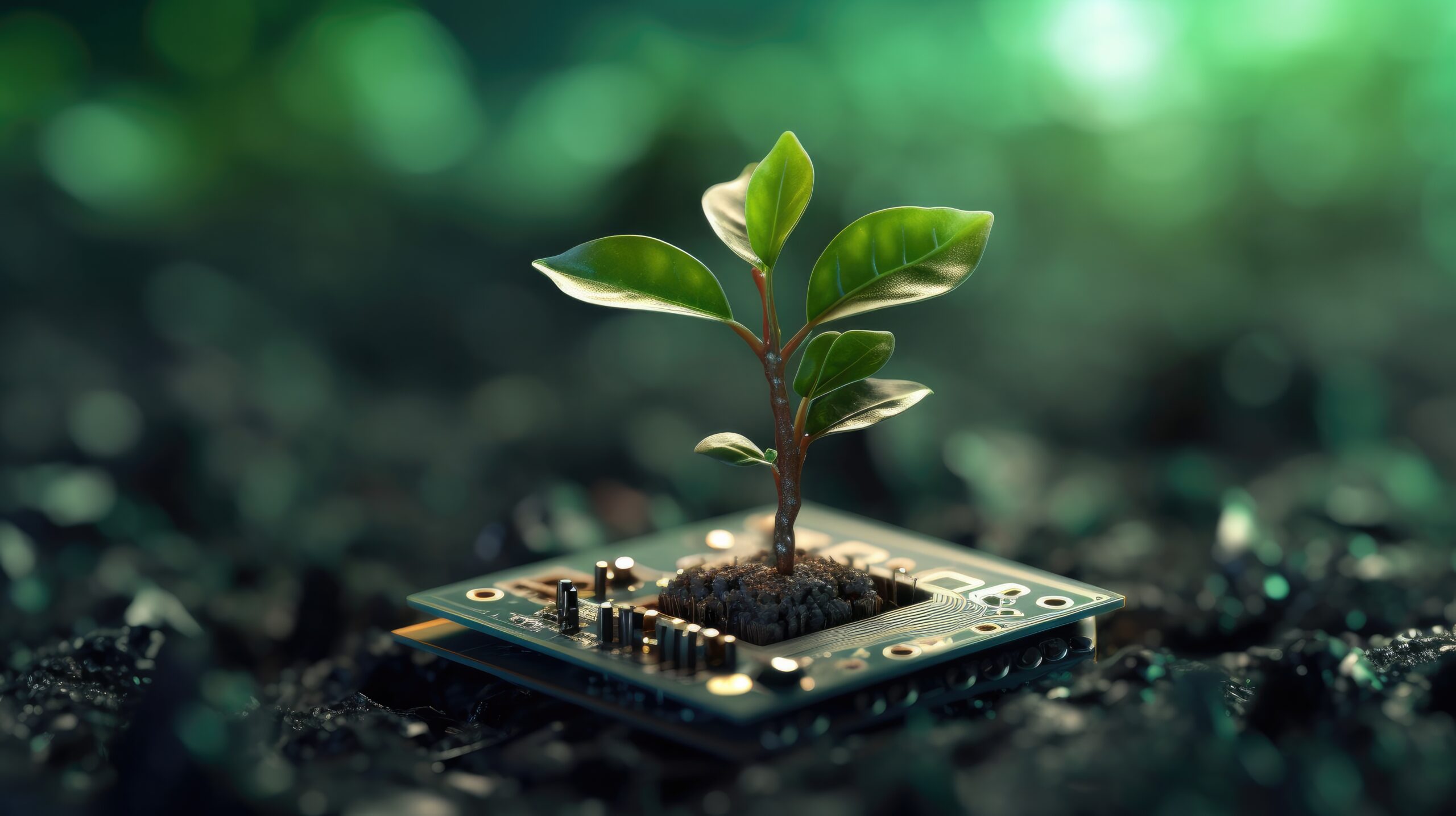
When we think about Artificial Intelligence, we usually think about software, data and computing.
We rarely think about heat.
Yet the data centres that support digital services and AI generate large quantities of heat while operating. They also require electricity and, in many cases, water for cooling.
What if some of that waste could become a useful resource?
Research highlighted by the European Commission in 2026 explored whether heat produced by data centres could be used for purposes including water purification and capturing carbon dioxide from the atmosphere.
The idea is a good example of circular thinking.
Instead of considering a data centre only in terms of the resources it consumes, researchers are asking whether the waste produced by that infrastructure could serve another useful purpose.
There are still technical and economic challenges to overcome, and the research does not mean every data centre can suddenly become a source of clean water. It does, however, encourage us to think differently about the relationship between digital and environmental infrastructure.
This is particularly relevant to SUSTaiN because the project connects AI with sustainability across several sectors rather than looking at each challenge in isolation.
Energy, water and digital technology are closely connected. An AI system might help improve water management, for example, while the computing infrastructure supporting that system also consumes energy and water.
Understanding these relationships is an important part of responsible innovation.
The SUSTaiN Starter Kit introduces learners to the environmental considerations surrounding AI, while the Energy Management and Water Management sections of the Training Programme allow educators to explore these issues from different sector perspectives.
This topic could also provide an interesting challenge for collaborative learning.
Students might explore how waste from one process could become an input for another, or consider how the environmental impact of digital infrastructure could be reduced.
Sustainability often begins with looking at familiar systems in a different way.
As our digital infrastructure expands, finding ways to use resources more intelligently will become increasingly important.